



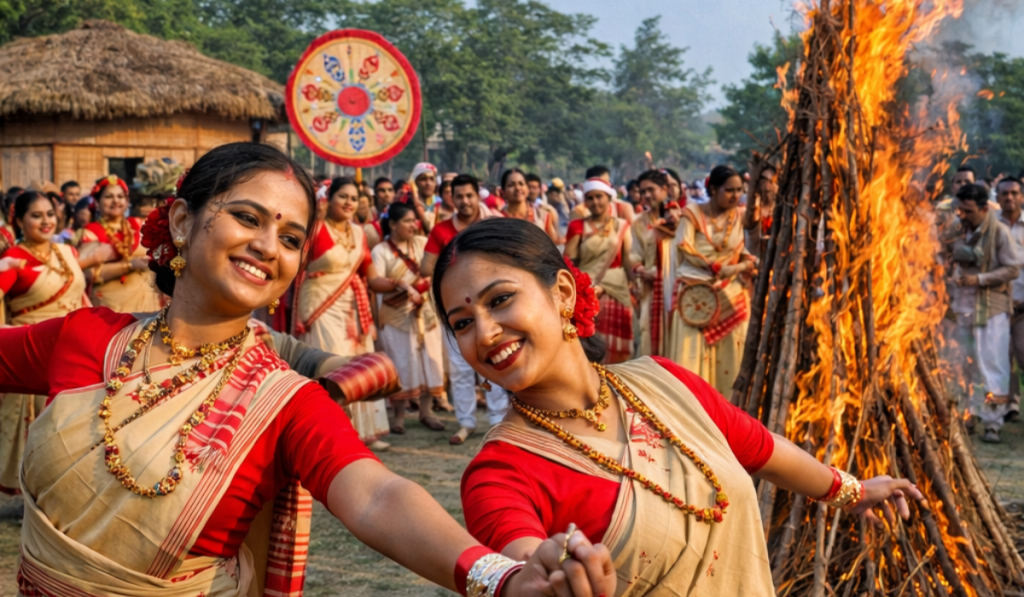
Assam’s Grand Harvest Festival Magh Bihu, also known as Bhogali Bihu or Maghor Bihu, is one of Assam’s most important and cherished festivals. Celebrated with joy and community spirit, it marks the end of the harvest season and the beginning of a new year. Observed in the first month according to the Bengali Panjika, the
Assam’s Grand Harvest Festival
Magh Bihu, also known as Bhogali Bihu or Maghor Bihu, is one of Assam’s most important and cherished festivals. Celebrated with joy and community spirit, it marks the end of the harvest season and the beginning of a new year. Observed in the first month according to the Bengali Panjika, the festival is a time to express gratitude for a bountiful harvest and honor Assam’s rich agricultural heritage.
Magh Bihu 2026: Date and Timings
Magh Bihu is celebrated in January, typically on the last day of the month of Pooh or Pausha, coinciding with Makar Sankranti. The festival signifies the start of the Sun’s Uttarayan journey, bringing warmth and prosperity after winter.
According to Drik Panchang, in 2026:
-
Uruka (eve of Magh Bihu): January 14
-
Magh Bihu: January 15
-
Sankranti Moment: 3:13 PM on January 14
History and Significance
Magh Bihu has ancient agricultural roots, tracing back to around 3500 BC. Early communities celebrated the harvest through fire rituals, praying for abundant crops and prosperity.
The festival is believed to have been first celebrated by the Dimasa Kacharis, an indigenous community of Assam. The word “Bihu” comes from “Bishu”, meaning peace, while “Bhog” refers to feasting and abundance.
Beyond agriculture, Magh Bihu emphasizes togetherness, sharing, and social bonding, bringing families, friends, and neighbors together in celebration.
Magh Bihu 2026: Rituals and Celebrations
The festival begins with Uruka, the eve of Magh Bihu, featuring a grand feast called bhog. Young men build temporary thatched huts called bhelaghar, while a meji, a large bonfire made of hay and bamboo, is set up nearby.
Women prepare traditional Assamese delicacies inside the bhelaghar, including:
-
Sunga pitha (rice cakes cooked in bamboo)
-
Til pitha (sesame rice cakes)
-
Coconut laddoos
As night falls, communities gather around the meji, singing folk songs and performing traditional dances.
At dawn, devotees take a ritual bath and light the meji, symbolizing the end of winter. Other age-old customs include:
-
Tekeli bhonga (pot-breaking)
-
Buffalo fights
-
Prayers to ancestral deities for blessings and prosperity
Celebrating Assam’s Cultural Heritage
Magh Bihu is more than a harvest festival—it is a celebration of life, community, and tradition. From feasting and folk music to age-old rituals, the festival reflects Assam’s rich culture and enduring agricultural practices.
For travelers and locals alike, Magh Bihu 2026 promises an immersive experience into the joys of Assamese heritage and the spirit of togetherness.
















Leave a Comment
Your email address will not be published. Required fields are marked with *