



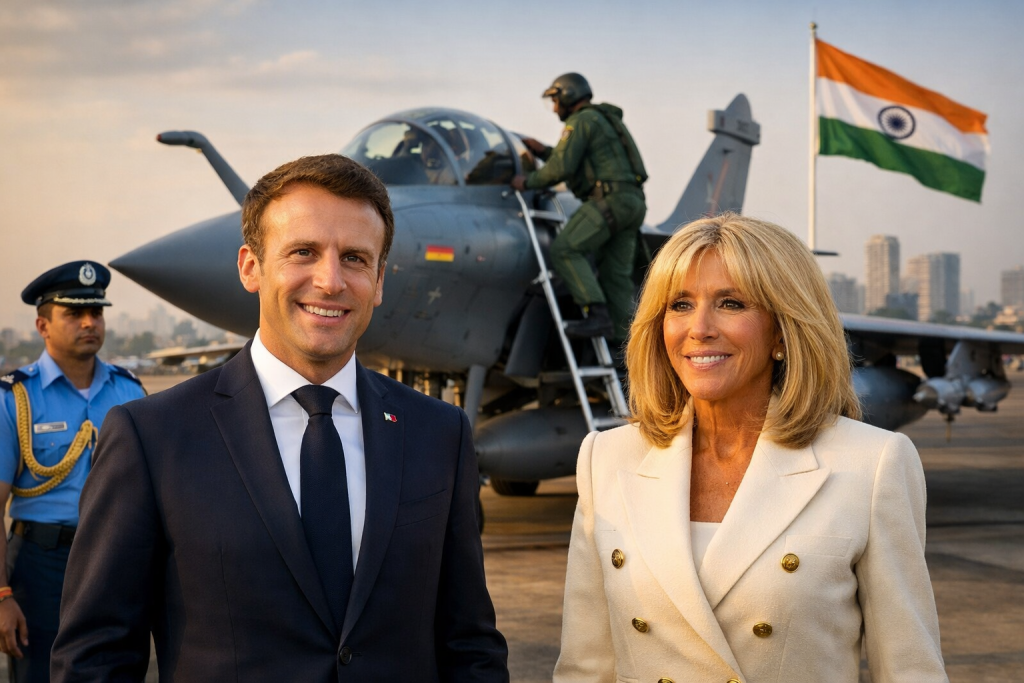
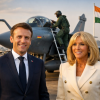
French President Emmanuel Macron arrived in India amid the final stages of negotiations for a major fighter jet deal that could reshape India’s air defense capabilities. The proposed $35 billion purchase of 114 Rafale jets would become India’s largest-ever defense contract, while marking a historic order for French aircraft maker Dassault Aviation. Key Details of
French President Emmanuel Macron arrived in India amid the final stages of negotiations for a major fighter jet deal that could reshape India’s air defense capabilities. The proposed $35 billion purchase of 114 Rafale jets would become India’s largest-ever defense contract, while marking a historic order for French aircraft maker Dassault Aviation.
Key Details of the Rafale Deal
The deal, which has been under discussion for over 15 years, would nearly double the number of Rafales currently in service with the French Air Force. India’s Ministry of Defence cleared the purchase last week, with cabinet approval pending. However, pricing discussions may delay an official announcement during Macron’s visit, according to sources in New Delhi.
Prime Minister Narendra Modi welcomed Macron and expressed optimism about strengthening bilateral ties, stating on X:
“I am confident that our discussions will further strengthen co-operation across sectors and contribute to global progress.”
Strategic Importance for France and India
For Dassault Aviation, the order represents its largest single export sale. The jets are expected to be assembled partially in India, aligning with New Delhi’s goal to expand domestic defense manufacturing. Engine manufacturer Safran is also exploring local production of Rafale engines for the first time.
This deal strengthens France-India relations and comes as Europe seeks to revitalize its arms industry. For India, which is the world’s largest arms importer, the Rafales will significantly enhance its air combat capabilities, currently limited to fewer than 30 fighter squadrons—well below the long-term target of 42.
Context: Regional Security Challenges
The Rafale acquisition is part of India’s efforts to modernize its fleet amid regional tensions. Last year, Pakistan reportedly used Chinese-made jets to down five Indian fighters, including at least one Rafale. Strengthening India’s fleet is therefore critical for maintaining air superiority in the region.
Economic and Industrial Benefits
Local assembly of Rafales in India will support the country’s ambitions in weapons production and aerospace development. The move will also help Dassault manage production capacity in France. Additionally, Macron’s delegation includes executives from AI start-up Mistral and nuclear power company EDF, highlighting the broader trade and technology collaboration between France and India, valued at approximately €15 billion annually.
Strategic Autonomy and Multi-Aligned Partnerships
France and India aim to promote strategic autonomy and strengthen multilateral cooperation amid global uncertainties. Analysts suggest that shifts in US foreign policy are motivating India to diversify its strategic partners.
Praveen Donthi, a senior analyst at Crisis Group, emphasized that India is leveraging its position as a large arms importer to support a multi-alignment strategy. However, he noted that Russia remains a key defense partner, providing Sukhoi fighters, tanks, aircraft carriers, and S-400 missile systems, making complete diversification challenging.
India’s Defense Modernization Journey
India has previously acquired 36 Rafales for the Air Force (2016) and 26 for the Navy (2024). The country is also developing indigenous aircraft, including the Tejas light fighter and a heavier jet, although progress has been constrained by engine manufacturing limitations.
Experts note that the new Rafales will form the core of India’s combat fleet through the 2030s and 2040s, until fifth-generation fighters are available in sufficient numbers.
Conclusion
The Rafale deal represents a major milestone in France-India relations, combining defense modernization, industrial collaboration, and strategic partnerships. While final negotiations over price may slightly delay its signing, the agreement is expected to boost India’s aerospace capabilities and further solidify France’s role as a key defense partner.











Leave a Comment
Your email address will not be published. Required fields are marked with *