



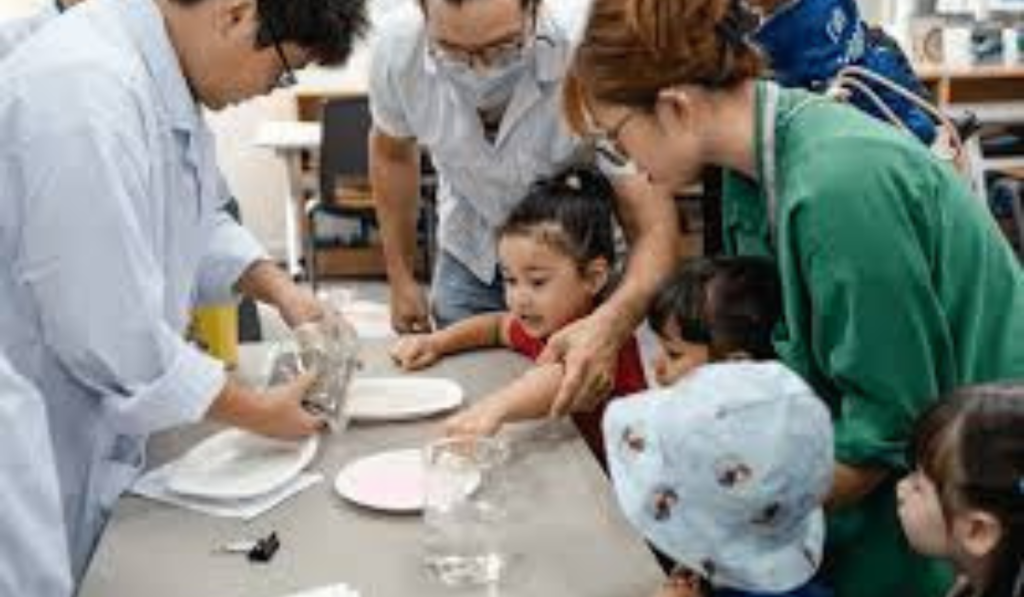
Early childhood education is gaining renewed global attention as research continues to highlight the importance of the first years of life. In the UAE, one education provider is leading a shift toward science-based learning, arguing that nurseries must better reflect what modern research tells us about child development. Bridging the Gap Between Science and Classrooms
Early childhood education is gaining renewed global attention as research continues to highlight the importance of the first years of life. In the UAE, one education provider is leading a shift toward science-based learning, arguing that nurseries must better reflect what modern research tells us about child development.
Bridging the Gap Between Science and Classrooms
Blossom Nursery & Preschool, which operates 32 centres across the UAE, is promoting an education model rooted in scientific evidence. The organisation believes there has long been a disconnect between academic research and everyday classroom practices.
According to Lama Bechara-Jakins, CEO for the Middle East at Babilou Family, early years education has historically been undervalued, despite clear scientific evidence that the first five years of life are critical for brain development.
She explains that many traditional nursery systems fail to apply this knowledge effectively, creating learning environments that do not fully support children’s emotional, cognitive, and physical growth.
A Science-Backed Learning Framework
The Sustainable Education Approach
To address this gap, Babilou Family developed the Sustainable Education Approach, a framework shaped by research in neuroscience, epigenetics, cognitive science, and social development.
The model also incorporates respected educational philosophies and insights gathered from educators and families across 10 countries. This research-driven process resulted in six core pillars that guide classroom practice:
-
Emotional and physical security
-
Natural curiosity and exploration
-
Nature-based learning
-
Inclusion and diversity
-
Respect for child rhythms
-
Strong partnerships with parents
Why Emotional Safety Comes First
The Role of Neuroscience in Learning
One of the most influential findings behind the approach is that children cannot learn effectively unless they feel safe. Neuroscience shows that stress and inconsistent care can negatively impact brain structure and development during early childhood.
As a result, Blossom prioritises stable relationships and calm learning environments, ensuring children feel secure before introducing academic concepts.
Understanding Child Rhythms
Another key insight highlights the risks of pushing academic learning too early. Research shows that ignoring a child’s natural developmental pace can hinder learning rather than accelerate it.
By respecting individual rhythms, educators allow children to develop skills at the right time, supporting long-term confidence and curiosity instead of pressure.
Secure Relationships Shape Brain Development
Why Attachment Matters
Research consistently shows that strong emotional bonds with caregivers are essential for healthy brain growth. Children learn best through trusted adults who provide consistent care and emotional support.
In practice, Blossom assigns each child a primary educator, helping build secure attachments. Behaviour is viewed through a neuroscience-informed lens, focusing on emotional needs rather than punishment.
Nature and Curiosity as Learning Tools
Outdoor Learning Is Not Optional
Despite strong evidence, nature-based learning is often overlooked—especially in urban environments. Experts argue that outdoor experiences reduce stress, strengthen focus, and support emotional wellbeing.
In cities like Dubai, Blossom treats nature as a developmental necessity, not an extra feature. Children spend time outdoors daily, engaging with natural materials, gardening, sensory play, and open-ended exploration.
Listening to Parents and Educators
Feedback from families across regions revealed shared concerns about academic pressure, limited outdoor time, and weak emotional connections in early learning environments.
Many parents sensed that something was missing, even if they were unfamiliar with the science behind it. This feedback reinforced the need for an approach that aligns parental instincts with scientific evidence.
Conclusion: A Smarter Future for Early Education
As scientific understanding of early childhood development grows, education systems must evolve alongside it. By integrating neuroscience, emotional security, and nature-based learning, science-backed models like Blossom’s aim to create environments where children can learn naturally, safely, and confidently.
Aligning early years education with science is no longer optional—it is essential for raising healthier, happier learners.















Leave a Comment
Your email address will not be published. Required fields are marked with *